The First Credit Union Cannabiz Conference In The US

Marijuana flower bud graphic.
Marijuana flower bud graphic. Image by chuck herrera from Pixabay.

Cannabis remains a Schedule 1 drug federally, making it difficult for credit unions and payment processors to accept the funds. Cannabis dispensaries are forced to handle thousands of dollars in cash, often paying their vendors and suppliers in cash.

The Credit Union Cannabiz Conference (CUCC) will demystify how credit unions can bank money from marijuana-related businesses. The conference will be held on April 5-8 at the Palmer House Hilton in Chicago.

The CUCC will be America’s first comprehensive discussion concerning cannabis banking services and the role of credit unions in serving this emerging industry, its employees and the community. Negotiating the rigorous compliance requirements is a big first step, but dealing with the needs of cannabis business accounts, creating an aligned strategy and managing communication and reputational risk is critical to success. Providing safe, compliant and secure processes together with core system support for business banking are required deliverables in this new service. Learn strategies for success and drawbacks of failed planning from leading business and industry experts.

“There is a tremendous opportunity, and tremendous risk, involved in banking cannabis funds. We realize that this is a new frontier that requires in-depth knowledge of cannabis-related businesses, of compliance and federal regulations,” said Amy Vigil, Executive Director of the CUCC. “We aim to demystify how credit unions can serve this growing business.”

At the CUCC, credit unions will learn:

  • What cannabis business owners want.
  • If you are ready to open business accounts, does your core system support your plan?
  • What do regulators look for in a model compliance program?
  • Best practice strategy.
  • Is your Board aware of the risks and the reason for entering the business?
  • How to communicate with employees, members, regulators and the community.
  • Managing reputational risk.

For more information about the conference, visit CUCannabiz.org.
Creso Pharma Pursues CBD For Pets

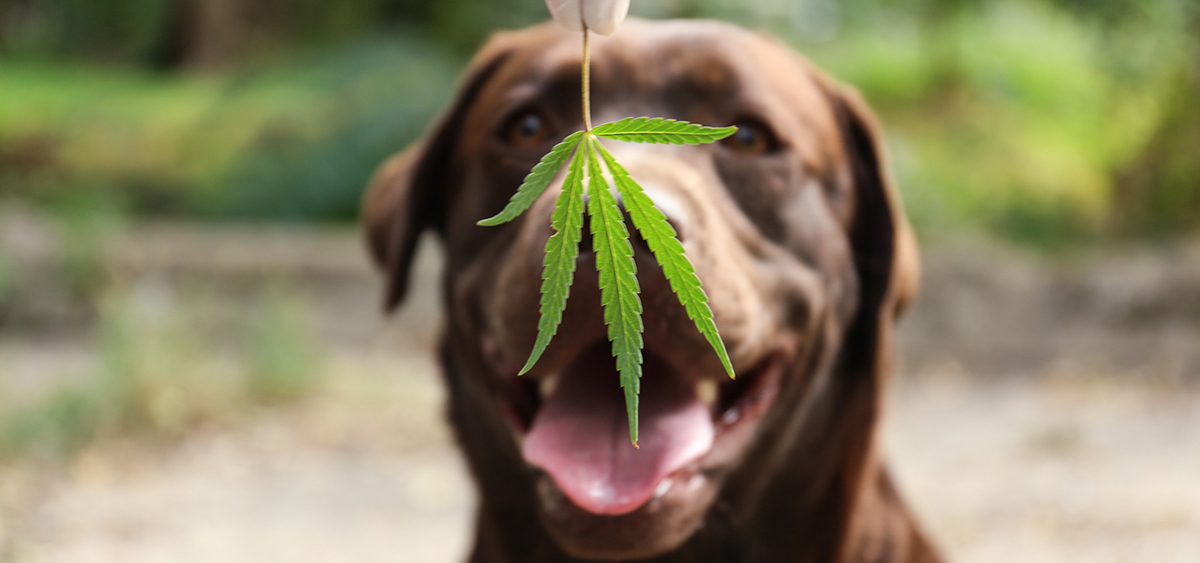
Detection Labrador dog sniffing hemp leaf outdoors.
Detection Labrador dog sniffing hemp leaf outdoors. Image provided by Creso Pharma.

Cannabis stocks had a challenging year in 2019, but signs are emerging that a change of fortunes is in store for the sector and several listed cannabis companies already look to be turning the corner.

Over the longer term, there’s little doubt that the sector is primed for massive growth as legalization continues to expand across the globe, the benefits of cannabis and hemp receive greater recognition, and market acceptance improves.

One market segment, in particular, is primed for significant growth — animal health. This is a market that was worth US$70 billion in 2019 and is projected to be among the fastest-growing Cannabidiol (CBD) sectors. The global veterinary CBD market is predicted to grow at a 123% annual rate (CAGR) in the years 2019 to 2025, says the latest Market Research Future report.

The massive size of this market and its anticipated growth can be attributed to the “the rising global trend of the ‘humanization’ of pets,” according to Dr. Miri Halperin Wernli.

Dr. Halperin Wernli is the CEO and co-founder of Creso Pharma, an ASX listed medicinal cannabis company that develops and commercializes cannabis and hemp-derived therapeutic, nutraceutical, and lifestyle products for human and animal health.

Creso has commercialized anibidiol Regular and anibidiol Plus for small, medium-sized, and large pets to help reduce stress and aid in the functioning of the animals’ nervous systems.

Pet owners report that the product has also contributed to the management of pain and improved the vitality of their pets after just one week of use in addition to normal feed. The product does not get the dogs ‘high’ as it is non-psychoactive and there is no chance of overdose.

The products are produced in Switzerland and commercialized in collaboration with Virbac S.A. in more than ten European countries.

In a milestone achievement, the company has now sold over three million doses of its anibidiol product since the product was launched in late 2017, while global sales of the product grew by approximately 700% in 2019. These three million portion sachets of anibidiol® granules have benefited over 100,000 dogs in less than two years since the product launched.

The impressive sales figures in Europe are paving the way for launches into additional countries on other continents including North and Latin America, where a growing need for natural complementary feed to help mitigate stress and improve the wellbeing of pets has been observed.

Furthermore, Creso Pharma has successfully developed three additional hemp-derived products to improve the wellbeing of pets. These are slated for launch later this year.

Responding to strong demand from veterinarians and pet owners, Creso, together with Virbac Switzerland, has also launched its new anibidiol Oil 500 product — a lifecycle management enhancement for the anibidiol range. Initially, the product will be marketed in Switzerland, with other national markets being added throughout 2020.

Advanced Vapor Devices And Hanu Labs To Produce The Next Generation Vapes

The Hanu Stone Vaporizer.
The Hanu Stone Vaporizer. Image provided by Advanced Vapor Devices.

Advanced Vapor Devices (AVD) and Hanu Labs have partnered up to design and manufacture the next generation of vaporizers and pods for the Hanu platform.

Hanu Labs makes the popular Hanu Stone oil vaporizer. Inspired by the natural form and feel of riverbed rocks, the ‘Stone’ – with its elegant, eye-catching ergonomic shape and premium extract partners, has shifted the paradigm of vaporization.

The Hanu devices will be powered by proprietary AVD technology, including AVD’s porous ceramic heating core that improves pod performance and produces superior extract flavor.

“What we’re doing is keeping the very best of the Hanu platform, while enhancing and adding advanced features to new devices that will take the platform to an entirely new level. AVD’s knowledge of cannabis extracts, design, and engineering capabilities, will enable Hanu to provide its customers with a comprehensive selection of superior performing devices,” says Hanu Labs founder, Seibo Shen.

The new Hanu Stone Pod System, available beginning early January 2020, is the first in the series of product collaborations between Hanu and AVD. The pod system has been completely redesigned to enhance flavor, smoothness, and reliability. In addition to improving on consumer experience, the filling process has been streamlined to enable Hanu extract partners to fill, cap, and package the pods more efficiently.

“We are thrilled to be partnering with Hanu Labs. The ‘Hanu platform opens a new chapter for our companies and extends the boundaries of how AVD technology can be adapted and used in other premium vaporizer systems. It took a lot of R&D, but we feel we’ve engineered the safest and best performing pod in the market,” explained Michael Brosgart, Chief Operating Officer of AVD.

Top Cannabis Executives, Insiders, and Experts To Appear At The Benzinga Cannabis Capital Conference

Marijuana flower bud in plastic pouch.
Marijuana flower bud in plastic pouch. Photo by GRAS GRÜN on Unsplash.

Now in its sixth installment, the Benzinga Cannabis Capital Conference brings together cannabis entrepreneurs and investors from across North America to learn about and discuss this growing industry. The conference will take place Feb. 24-25, at the Fontainebleau Miami Beach Hotel. 

Benzinga is a leading financial media company dedicated to making information easier to consume. Its news desk is constantly breaking stories and moving billions of dollars of market capitalization through its real-time news tool, Benzinga Pro.

“This conference is about bringing together the movers and shakers behind the industry. Hundreds of millions of dollars have been raised at previous bzcannabis.com events,” said Benzinga Founder & CEO Jason Raznick. 

The event will cover topics such as the hottest companies impacting the cannabis tech industry, solutions to winning medical & recreational clients, investor’s perspectives on the state of the industry, and many more.

Attendees should expect to hear from an expansive list of speakers over the two days. Below is an overview of the high-profile leaders to speak at the Miami event:

Kim Rivers, CEO, Trulieve
Beth Stavola, CSO & Director, iAnthus
Mitchell Kahn, CEO, Grassroots Cannabis
Jessica Billingsley, CEO, Akerna
Tim Seymour, CIO, Seymour Asset Management
Nicholas Vita, CEO, Columbia Care
Tahira Rehmatullah, President, T3 Ventures
Josh Genderson, CEO, Holistic Industries
Codie Sanchez, Managing Director, Entourage Effect Capital
Roderick Stephan, Partner, Altitude Investment Management
Jonathan Conforti, Vice President of Corporate Development, Abacus Health Products
Holly Bell, Director of Cannabis, Florida Dept of Agriculture and Consumer Affairs
Mitchell Baruchowitz, Managing Partner, Merida Capital Partners
Kyle Barich, CMO, Holistic Industries
Peter Miller, CEO, SLANG Worldwide
Ed Schmults, CEO, Calyx Peak Companies
Michael Cammarata, President & CEO, Neptune Wellness Solutions
Giadha Aguirre de Carcer, Founder and CEO, New Frontier Data
Brian Goldstein, Founder & CEO, Noa Botanicals
Steve Hawkins, Executive Director, Marijuana Policy Project
Christian Schenk, CEO, Driven
Brent Johnson, CEO, Hoban Law Group
Gary Allen, COO, New Frontier Data
David Bukzin, Vice Chairman, Marcum LLP
David Skul, Chairman of the Board, Zefyr
Michael Mills, President & Interim CEO, Body and Mind Inc.
Jason Raznick, CEO & Founder, Benzinga
José Bacellar, President & CEO, VerdeMed
Brian Schinderle, EVP of Finance, Grassroots
Javier Hasse, Managing Director, Benzinga Cannabis

For more information or to register for the Benzinga Cannabis Capital Conference, visit www.benzinga.com.

The Pelicann Edibles Hits US Market

Cannibble Food-Tech Ltd logo.
Cannibble Food-Tech Ltd logo. Image provided by Cannibble Food-Tech.

Cannibble Food-Tech Ltd., an Israeli-based food-tech developer of cannabis-based edibles, hits the US market with its Pelicann edible products. The products were officially presented at the MJBizCon in Las Vegas last month and its first sales already started.

The Pelicann presents powder-mixes enhanced with cannabinoids and hemp products. The products are recommended for personal use with a ‘single-serve’ packages and proposed for kiosks and convenience stores for an instant serving of prepared products. The easiest preparation concept promises freshly made cupcakes or shakes or flavored popcorn or many others just in few seconds by the consumer. It’s easy to make it everywhere.

The Pelicann products are offered in three families of cannabis, easy to spot by unique colors and carrying all types of cannabis ingredients: hemp seeds, hemp seeds oils, and hemp protein (Green); full-spectrum CBD to isolated CBD (Pink), and THC infused (Blue). All of The Pelicann products are manufactured under strict Food Manufacturing Quality Assurance (QA) protocols and with a known tested and fixed cannabinoids dosage.

Products are destined to markets according to local regulations:

  1. CannaShakes – Powders for making shakes and/or cold and/or hot beverages.
  2. Cannashakes Sports – Hemp protein shake mixes with CBD, which can be enjoyed by all professional and amateur athletes, just like any other protein shake. The Cannashakes Sports are plant-based, sugar-free, perfectly flavored with high protein levels of pure hemp protein and enhanced fixed dosage of CBD.
  3. CannaMix – Powders for microwave or oven making instant, muffins, cupcakes, pancakes, etc. with or without hemp protein.
  4. CannaSpices – Pure or blended spices for pizzas, steaks, chicken, salads, and more.
  5. CannaPop – The Cannapop is a microwave instant popcorn mix ready in 2-3 minutes. Every single-serve package contains 50 gr (1 ¾ oz) of corn grains, and through our unique technology, all are perfectly covered with our special mix that ensures all the flavoring and active ingredients to be evenly spread on the popcorn.

Premium Hemp Products From Urban Daze

Urban Daze hemp flower and CBD oil/caplets hemp products.
Urban Daze hemp flower and CBD oil/caplets hemp products. Image provided by Agrozen Life Sciences.

Agrozen Life Sciences launches the Urban Daze brand and website to build on overall brand strategy and online portfolio within the hemp industry. The Urban Daze brand expands consumer reach with unique branding elements and a premium hemp product line including craft hemp flower, CBD oil, and CBD caplets. Urban Daze products and brand are supported by our R&D Hemp Cultivation Center and testing laboratory to produce premium craft hemp strains by maximizing cannabinoids and yields.

“The Urban Daze brand is a perfect fit within our overall business strategy and product direction that targets a new and growing audience,” states Brian Schroeder, Co-Founder, and CEO. “By leveraging our internal assets, we can react quickly to market demands and apply a scientific approach to our hemp plant profiles and product development, creating premium hemp products,” he adds.

“With the launch of urbandazehemp.com and the Urban Daze brand, we are tapping into a new consumer market to showcase incredible hemp products without any psychoactive effects,” states Austin Schroeder, Co-Founder, and VP of Operations. “Urban Daze offers outdoor hemp flower, tinctures, caplets, and gummies while our indoor premium craft hemp flower will be marketed under the Urban Daze limited edition product line with a vintage look and feel, calling out premium indoor versus outdoor-grown hemp strains,” he adds.

Agrozen Life Sciences conducts research on the cannabis hemp plant and extracts, formulates, markets, and distributes the highest quality health and wellness nutritional supplements. Their product focus is primarily on the therapeutic benefits of the cannabinoids found in the hemp plant such as CBD, CBG, and CBN. Agrozen’s specialty line of CBD products for humans are planted, harvested, and then processed using the purest CO2 extraction method to achieve the highest quality hemp oil for our products. All Agrozen and Urban Daze branded CBD products are researched, lab tested, and strictly follow a Good Manufacturing Practice (GMP).

Cannabis Company Kicks Off Reforestation Campaign In Australia After Devastating Bushfires

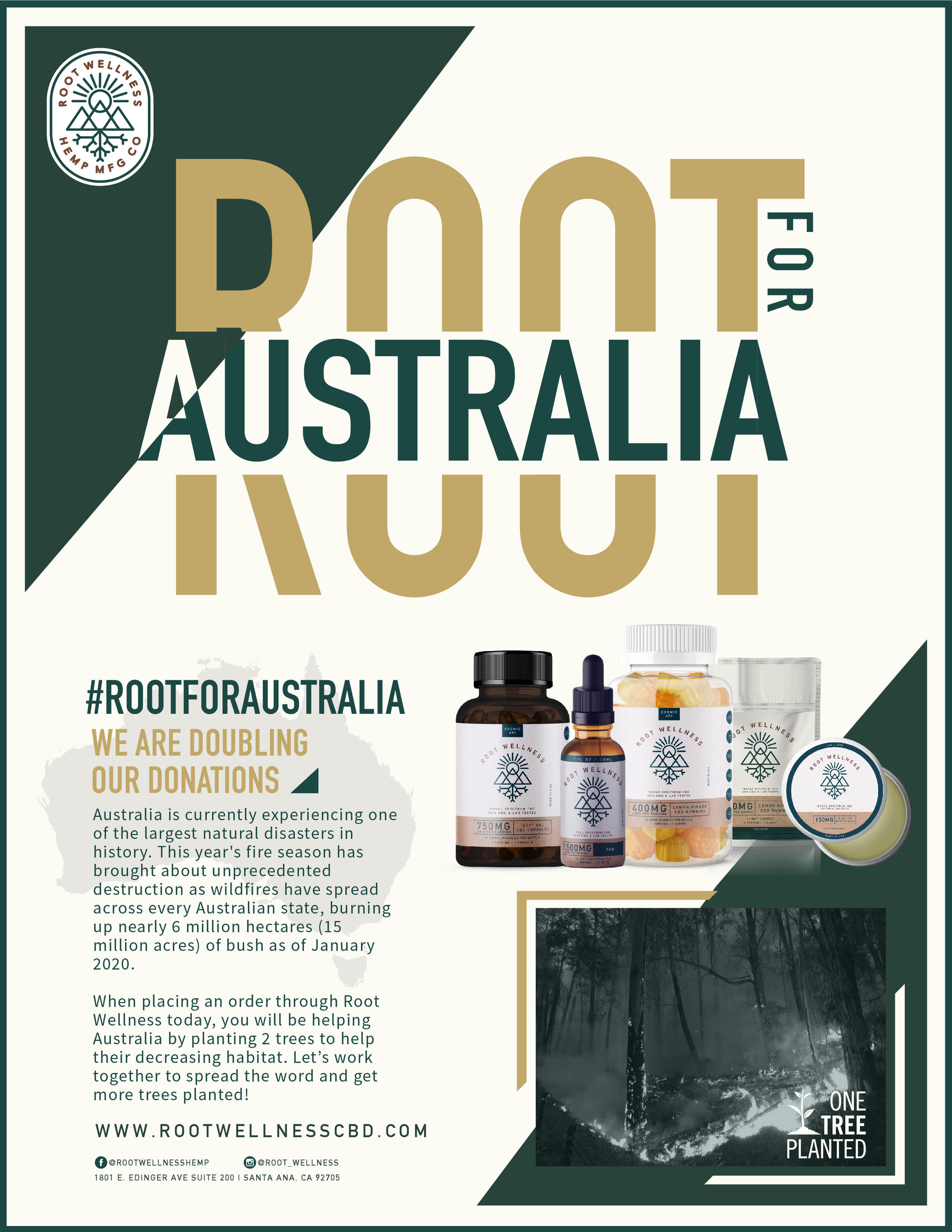
Root Wellness CBD's #ROOTFORAUSTRALIA reforestation campaign.
Root Wellness CBD’s #ROOTFORAUSTRALIA reforestation campaign. Image provided by Root Wellness CBD.

Root Wellness CBD #ROOTFORAUSTRALIA reforestation campaign is an effort to replant and replace trees throughout the devastated regions of Australia that have been affected by the recent wildfires.

Since inception, Root Wellness CBD has donated proceeds from orders to tree-planting efforts throughout the world. Due to the recent events in Australia, the company has decided to focus all of its force into the Root For Australia campaign from now until April 2020. The campaign takes proceeds from every single order of Root Wellness CBD products and will use them to replant trees throughout Australia.

Drought has plagued Australia since 2017. In September, the unthinkable happened as mass fires engulfed Australian states. Sparking first in Queensland and New South Wales, the fires quickly spread throughout the rest of the country. The most severe and vast burning has taken place in the state of New South Wales where almost four million hectares have been destroyed by the fires, burning everything in its path including more than 1,500 homes and displacing the families that occupied them. Entire ecosystems have been reduced to ashes, leaving what is left of the native species such as koalas, kangaroo, and wombats with no relief or sustainable homes to offer a retreat.

“Root Wellness has always carried the mission to give back to the earth that our products are made from,” said Robert Crossley, CEO of Root Wellness CBD. “Given the current circumstances, we felt it was of absolute importance that we direct our contributions accordingly. Root Wellness was founded on the premise of making an impact on the root of environmental problems while simultaneously offering products that nourish the mind and body. Root Wellness offers a wide variety of CBD-infused products and has partnered with One Tree Planted, with the promise of planting one tree for every order we receive. For our #RootforAustralia campaign, we will be doubling our commitment.”

One Tree Planted is a 501C3 non-profit with a focus on global reforestation efforts. As an environmental charity, they are dedicated to making it easier for individuals and businesses to give back to the environment, create a healthier climate, protect biodiversity and help reforestation efforts around the world. All by planting trees! Founded in 2014, they have more than doubled the number of trees planted year over year.

Root Wellness CBD has set a goal for the calendar year of 2020. They hope to be able to plant over 10 million trees worldwide through their partnership with One Tree Planted.

Microsoft Approves First Cannabis ERP Solution

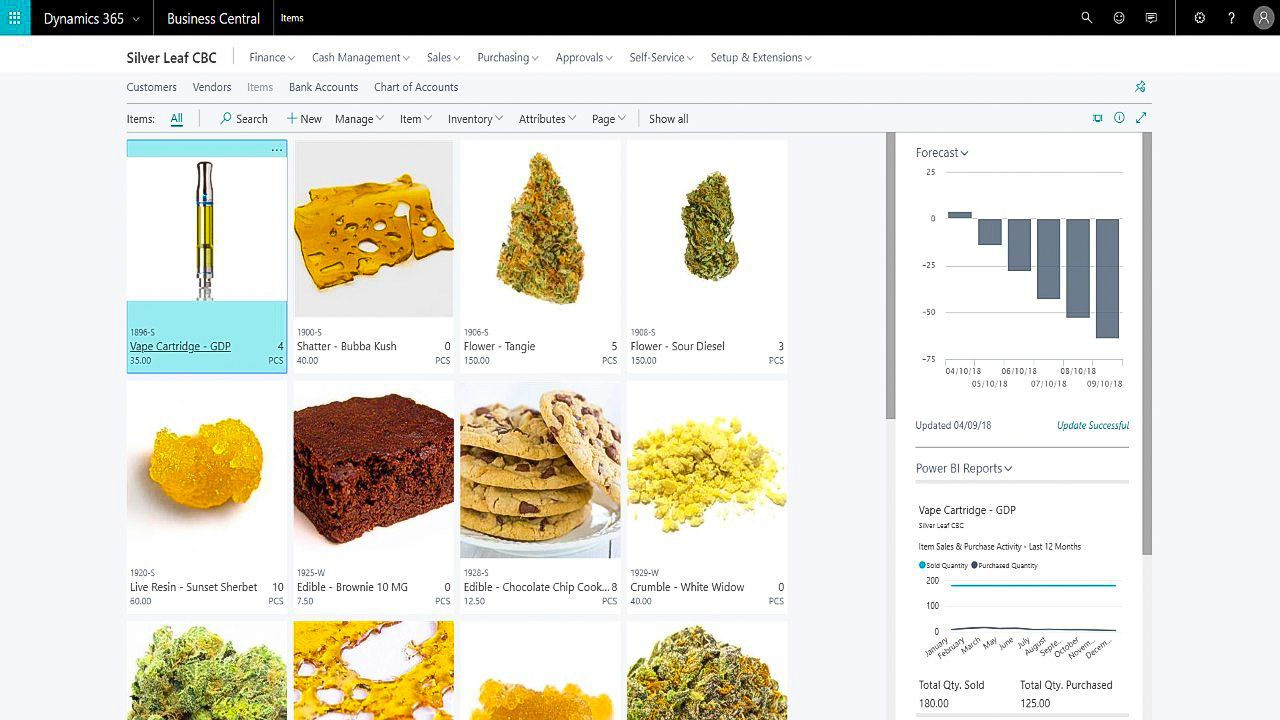
Silver Leaf Cannabis Business Central (CBC) ERP Solution available on Microsoft Dynamics 365 Business Central.
Silver Leaf Cannabis Business Central (CBC) ERP Solution available on Microsoft Dynamics 365 Business Central. Image provided by Silverware, Inc.

Microsoft recently approved Silver Leaf Cannabis Business Central (CBC) on its app marketplace, AppSource, making it the first-ever cannabis ERP (Enterprise Resource Planning) solution made publicly available on Microsoft Dynamics 365 Business Central. The Phoenix-based business management solutions provider, Silverware Inc., established its cannabis vertical, Silver Leaf CBC, in the fall of 2018 to address the needs of high growth companies.

The Silver Leaf CBC software application comes pre-baked with the flexible, robust ERP of Business Central, plus cannabis-specific solutions such as product tracking, quality control, delivery compliance, and financial best practices. Silver Leaf CBC is integrated with various state track and trace systems. Contact directly to inquire about your state.

“We conducted extensive research to configure our traditional ERP solution for the cannabis industry,” states Sara Silver, founder, and president of Silverware Inc. “After spending months developing and beta testing, we have a world-class ERP software with the audit capabilities investors require and the ability to effectively streamline business processes and help automate state compliance requirements, which is necessary to maintain [cannabis] licensing.”

In 2017, Silverware hired Product Manager, Alex Glueckler to explore how they could provide an add-on solution for the cannabis industry. Glueckler has extensive knowledge and experience in this niche; with a career in accounting finance prior, Glueckler was the CFO of Reef Dispensaries (Tyrke Companies), one of the largest cannabis companies in the southwest. He then served as CFO/COO for a private equity company that merged in 2017 with Harvest Inc., to eventually become Harvest Health and Recreation, Inc.

Glueckler explains, “The cannabis industry is facing new levels of growth, but the entry-level systems do not have the capability to keep up. I’m excited that we are the first to be powered by Microsoft’s award-winning Business Central platform and can offer our solution backed by Silverware’s 30 years of implementation experience.”

Final Results of Patient-Focused Medical Marijuana Research Study Published

Whitepaper and author companies by Compassionate Certification Centers.
Whitepaper and author companies. Image provided by Compassionate Certification Centers.

Compassionate Certification Centers, a medical cannabis healthcare system, in collaboration with Affinity Bio Partners, a Clinical Research Organization (CRO), and AI Health Outcomes, CannaBot, released the conclusion and publication of a medical marijuana-focused observational study in Pennsylvania.

This research evaluates thousands of subjects who are current or past participants in the Pennsylvania Medical Marijuana Program who were asked to answer a variety of questions based on their first-hand experience. Independently, Compassionate Certification Centers and Affinity Bio Partners designed the patient questionnaire, which was released to the patients through the CannaBot. Patients provided their feedback on varying parameters – with results indicating 99.62% of patients surveyed were able to reduce symptoms using medical cannabis and 63.73% of patients stating that they were able to identify the strain that is most effective for their needs. Other parameters patients were surveyed about included (but are not limited to): demographics, product selection, and use preferred route of administration, cost assessment, and dispensary experience.

“The goal of this retrospective Pennsylvania patient data collection analysis was to gather information, from a patient-based perspective, regarding the Pennsylvania State Medical Marijuana program from its inception through late 2019. This information and data, provided directly by the patients the state medical marijuana program is serving, is paramount to the program’s continued success and growth,” cites the paper’s authors, Dr. Bryan Doner (CCC) and Christina DiArcangelo (ABP).

Download to read the results of the full study.

Tech Company Developing THC Breathalyzer To Tackle Cannabis Impaired Driving

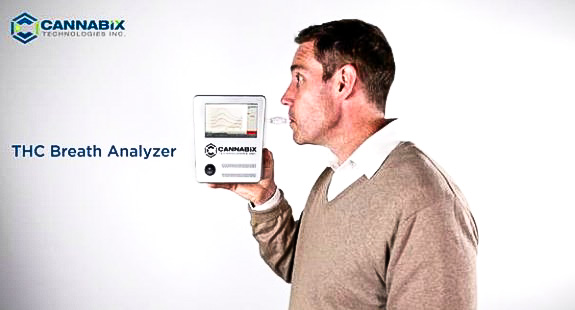
Man breathing into Cannabix THC Breathalyzer.
Man breathing into Cannabix THC Breathalyzer. Image provided by Cannabix Technologies.

With alcohol, it’s a no brainer. Test for the amount circulating through the driver’s bloodstream with a proven breathalyzer, compare the results to the legal limits, and the case is made. Human bodies generally process alcohol at a defined pace, so when the test comes up positive there is no doubt the driver is under the influence at that time. It took a long time to get to this point. A primitive breathalyzer was first invented in 1927, vastly improved upon and patented in 1954, and taken even further in 1967 with the founding of Lion Laboratories. These developments eventually led to a recognizably modern version in 1980, 13 years after the United Kingdom adopted the first drunk driving laws.

With cannabis, it’s complicated. THC, the intoxicating ingredient in cannabis, is metabolized by the body into a variety of forms. These metabolites can be found in the body long after the intoxicating effects wear off, meaning that simple tests could easily lead to false positives. Further complicating the picture is that there is no scientifically-proven level of THC which would indicate impairment. Lack of scientific knowledge is the crux of the issue, as the plant’s illegal status has effectively eliminated research for the past 80 years or so.

Fortunately, companies and regulators are recognizing cannabis-impaired driving as a major public safety issue and are actively pursuing solutions. The state of California recently passed legislation to fund research efforts by the California Highway Patrol. The plan is to test drivers in a controlled environment, on CHP property, with the hopes of attaining a clearer picture of what constitutes cannabis impairment. This is a major part of the current problem – can regulators determine what levels of THC in the bloodstream indicate impairment?

Cannabix Technologies is approaching the problem from the other end, and its research could help inform public policy along the way. The company is developing the Cannabix Marijuana Breathalyzer with the hopes of introducing an accurate and convenient tool for measuring THC in the breath. Designed for both law enforcement and workplace applications, the breathalyzer utilizes FAIMS (high field asymmetric waveform ion mobility spectrometry) to detect and identify THC and its metabolites.

In conjunction with researchers from the University of Florida, the Cannabix team has guided the project through a few Beta versions. Along the way, scientists are learning about the intricacies of THC metabolism and detection. This past summer, Cannabix announced a breakthrough in collecting breath samples, enabling the detection of tiny amounts of metabolized THC. The company is filing patent applications, and updating prior applications, along the way to protect its intellectual property as it works toward a viable solution.

More recently, Cannabix’s marijuana breathalyzer featured in a CNN article discussing the obstacles to and potential solutions for the development of a reliable cannabis testing system. The company also recently announced significant improvements in the performance of its breathalyzer, showing a 6-fold increase in the sensitivity of the THC detection device. Cannabix is developing a more robust device designed for roadside use by law enforcement while simultaneously developing a smaller, more affordable version for home or workplace markets.

A recent survey by AAA indicates that Americans have a fairly casual attitude toward driving while high on cannabis. About 70% of respondents think it’s unlikely that stoned drivers will be caught, which makes sense considering the lack of tools currently available to law enforcement. More concerning is the estimated 14.8 million drivers who reported driving within one hour of cannabis use in the last 30 days. On top of that, 7% of respondents thought it was acceptable to drive after using the drug (compared to 1.6% who approved of drinking and driving).

With the recent rise and spread of cannabis legalization, law enforcement agencies have been tasked with the massive project of educating the public about the dangers of driving high, while simultaneously developing procedures to get impaired drivers off of the streets. At this point, judging by the AAA survey, the education is going slowly and the public has no confidence in the ability of officials to enforce the laws on the books.

The recent California legislation is a step in the right direction, committing money and personnel to study the thorny question of what constitutes cannabis-impaired driving. That type of research could lead to a more clear and measurable definition of cannabis impairment. Concurrently, the research being conducted by Cannabix Technologies could lead to an accurate and convenient roadside test that can be used to measure THC levels against whatever guidelines the impairment research yields.

This is a sort of positive feedback loop, created by long-suppressed scientific research made possible by the wave of cannabis legalization sweeping across the continent. Just as scientists are studying the potential medicinal effects of the plant after many years of prohibition, researchers are catching up on the potential downsides of cannabis use in everyday life. No, it’s not Reefer Madness with hallucinations, insanity, and killing. But driving under the influence is a serious public safety concern that is finally being addressed through the proper channels of scientific understanding. It’s about time.